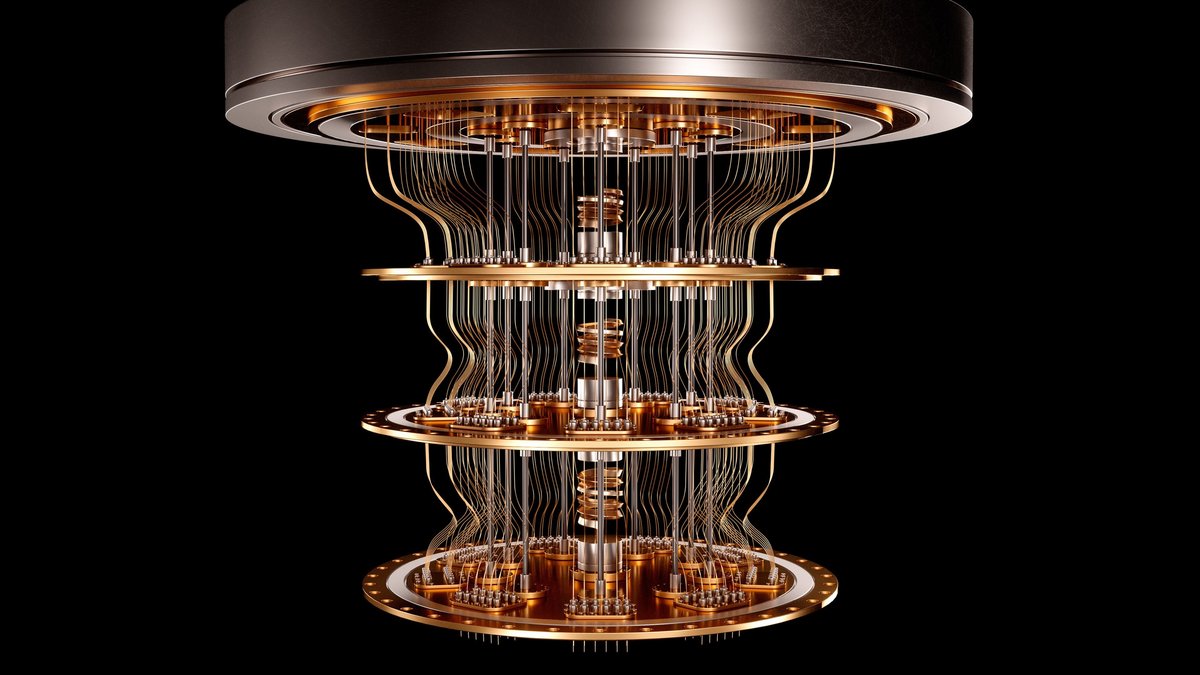
Quantum computing usually gets talked about like something out of a movie. You hear things like insane speed, breaking encryption, or machines that think completely differently from normal computers. After a while, it starts to feel far away and hard to picture.
But the basic idea isn’t that complicated.
Regular computers use something called bits. Quantum computers use qubits. That sounds like a small change, but it actually changes a lot because qubits follow different rules.
Those rules come from quantum physics, which is where things start to feel a bit strange. You’ll hear terms like superposition and entanglement. They matter, but you don’t need to overthink them at first.
Also, quantum computers aren’t here to replace your laptop. At least not in the way people sometimes imagine. They’re more like special tools for very specific problems.
If you want a simple breakdown from a trusted source, you can check this NIST guide. It explains things in a more grounded way.
What regular computers do
Every device you use today runs on bits.
A bit is just a 0 or a 1. That’s it
It sounds simple, but that setup is what powers everything from apps to games to websites.
The good thing about bits is they’re stable. If something is a 0, it stays a 0 until something changes it.
That reliability is a big reason why normal computers work so well.
From there, computers combine lots of bits and process them step by step. They can do this really fast and scale it across many machines.
But there’s a limit.
Some problems get too big too quickly. The number of possibilities grows so fast that even powerful computers struggle.
That’s where quantum computing comes in. Not to replace regular computers, but to handle certain problems differently.
What a qubit changes
A qubit is like a bit, but less strict.
Instead of being just 0 or 1, it can exist in a mix of both while the computation is happening.
That idea alone changes how information is handled.
When you combine multiple qubits, the number of possible states grows really fast.
Two qubits can represent four states. Three can represent eight. It keeps doubling.
That’s where the excitement comes from.
But there’s a downside too.
Qubits are fragile. They’re easy to disturb and harder to control compared to normal bits.
Heat, noise, or even small changes in the environment can mess things up.
So while qubits open new possibilities, they also make things harder to build.
Superposition, in simple terms
Superposition is one of those terms that sounds more complicated than it needs to be.
You’ll often hear that a qubit can be 0 and 1 at the same time. That’s close, but not the full picture.
It’s more like the qubit holds a mix of possibilities while the system is running.
This lets the computer work with many possible outcomes at once.
But here’s the important part.
It doesn’t just try every answer and pick the best one.
When you measure the qubit, you only get one result.
So the goal is to design the system in a way that the correct answer becomes more likely.
If that setup is good, you get useful results. If not, you just get noise.
Why entanglement matters
Entanglement is where things get a bit weird, but also interesting.
It means qubits can become linked to each other.
When that happens, you can’t really treat them separately anymore. They act as one system.
This is useful because many real problems involve relationships between things.
For example, in chemistry or optimization, different parts affect each other.
Entangled qubits can represent those connections more naturally.
But again, it’s not easy to maintain. The more complex the system gets, the harder it is to keep everything stable.
Measurement is a big limitation
Measurement sounds simple, but it changes everything.
While the system is running, qubits can hold complex states.
But once you measure them, that state collapses into a single result.
So you don’t get to see all the possibilities. You only get one outcome.
That’s why the design of the algorithm matters a lot.
You have to guide the system so the right answer shows up when you measure it.
If you measure too early, you lose the useful state.
So timing and structure are really important.
Why it’s hard to build
Building a quantum computer is not easy.
Qubits are sensitive. Small changes in temperature or environment can break the system.
That’s why many setups are kept in very controlled conditions.
Errors are also a big issue.
Compared to normal computers, quantum systems make more mistakes.
Fixing those errors is one of the biggest challenges right now.
There’s also the problem of scale. You need many qubits working together and they all need to stay stable.
That’s still something researchers are working on.
Where it might be useful
Quantum computers are not for everyday tasks.
You won’t use one for browsing, emails, or editing videos.
They’re more useful for specific problems.
One big area is chemistry.
Simulating molecules is very hard for normal computers, but quantum systems might handle it better.
This could help in areas like drug research or materials.
Optimization is another area.
Things like scheduling, logistics, or planning can get very complex and quantum methods might help explore solutions faster.
There’s also cryptography.
In the future, strong quantum computers could break some current encryption methods. That’s why people are already working on new ones.
The simple way to think about it
The easiest way to see it is this.
Regular computers are still the main tool.
Quantum computers are a special tool for specific problems.
They don’t replace each other. They work side by side.
Right now, quantum computing is still early. There’s progress, but also a lot of challenges.
Still, it’s interesting because it changes how we think about computing.